

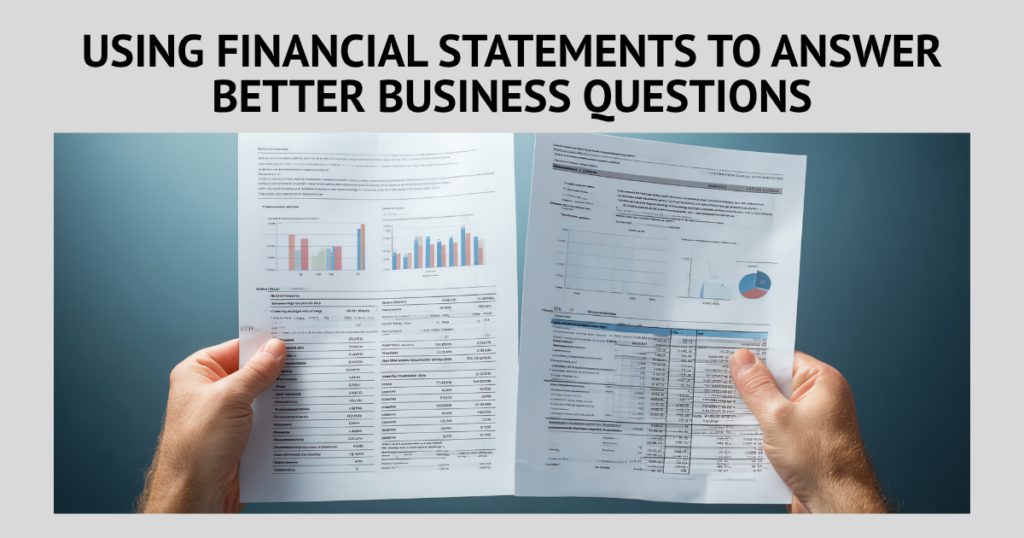
Using Financial Statements — In a Nutshell
- Financial statements are not just reports—they are tools for answering critical business questions.
- Accurate and timely financial data supports better decision-making and reduces uncertainty.
- The value of financial statements comes from how they are interpreted—not just how they are prepared.
Why Financial Statements Matter Beyond Reporting
Many business owners review financial statements only when required—for tax filing, loan applications, or compliance purposes. However, financial statements provide insight into how a business is performing, where resources are being used, and what adjustments may be needed.
When used correctly, they help answer questions such as:
- Is the business truly profitable?
- Where are costs increasing?
- Is cash flow sufficient to support operations?
- Are current decisions aligned with long-term goals?
Without regular review, these questions often go unanswered until issues become more difficult to address.
The Three Core Financial Statements
Understanding each statement helps clarify what questions they can answer.
1. Profit and Loss Statement (Income Statement)
This report shows revenue, expenses, and net income over a period of time.
It helps answer:
- Are revenues growing or declining?
- Are expenses increasing faster than income?
- Is the business operating profitably?
2. Balance Sheet
This statement reflects what the business owns and owes at a specific point in time.
It helps answer:
- What assets does the business have?
- How much debt exists?
- Is the business financially stable?
3. Cash Flow Statement
This report tracks how cash moves in and out of the business.
It helps answer:
- Is there enough cash to meet obligations?
- Are operations generating cash or consuming it?
- Are large expenses impacting liquidity?
Turning Financial Data Into Better Questions
Financial statements are most valuable when they lead to better questions, such as:
- Why are margins changing over time?
- Which expenses are no longer aligned with growth?
- Are there patterns in cash shortages or surpluses?
- What adjustments can improve financial efficiency?
Asking these questions regularly allows business owners to move from reactive decisions to proactive planning.
Common Challenges in Using Financial Statements
Many businesses struggle to use financial statements effectively due to:
- Infrequent review (only during tax season)
- Lack of understanding of key metrics
- Incomplete or inaccurate records
- Focus on totals instead of trends
These challenges limit the ability to make informed decisions.
Best Practices for Using Financial Statements
To get the most value from your financial data:
- Review statements regularly—not just annually
- Compare results across periods to identify trends
- Ensure records are accurate and up to date
- Focus on both performance and position (profit and balance)
- Use financial data to guide decisions—not just confirm them
Consistency in review leads to better clarity and stronger decision-making.
The Bottom Line
Financial statements are not just historical records—they are decision-making tools.
When reviewed and understood regularly, they help answer better business questions, reduce uncertainty, and support more informed financial decisions.
Subscribe to our newsletter to receive our latest blog directly to your inbox.
- 2024 Tax Rates: Key Changes and What They Mean for You

- Adjusting Financial Plans When the Year Doesn’t Go as Expected

- Bonus Depreciation vs. Section 179 Deductions in 2024: Maximizing Tax Benefits for Your Business

- Common Documentation Gaps That Delay Tax Returns

- Conducting a Comprehensive Year-End Financial Review: A Guide for Small Business Owners
- Converting an LLC to a C-Corporation and the QSBS Reasons to Do It