


Reviewing Assets and Expenses Before December Decisions
Year-end can create pressure to make purchases or spend money before December 31. Before making those decisions, take a closer...

Preparing Your Business Financials for a Smooth Year-End Close
A smoother year-end close starts well before December. Reviewing your books, reconciliations, outstanding balances, and financial reports now can help...

Giving Strategically: Aligning Charitable Goals With Tax Efficiency
Business Strategy & Advisory Accounting & Financial Management Tax Planning & Compliance Charitable Giving Can Be Both Meaningful and Financially...

Understanding How New Tax Guidance Affects Planning Decisions
Tax Planning Doesn't Stand Still One of the biggest misconceptions about tax planning is that once you've developed a strategy,...

How Retirement Planning Changes at Higher Income Levels
Business Strategy & Advisory Accounting & Financial Management Tax Planning & Compliance As Income Grows, Retirement Planning Becomes More Strategic...

Tax Planning Moves That Still Work Late in the Year
Why the Final Months of the Year Still Matter By the time the calendar reaches the final quarter, many business...
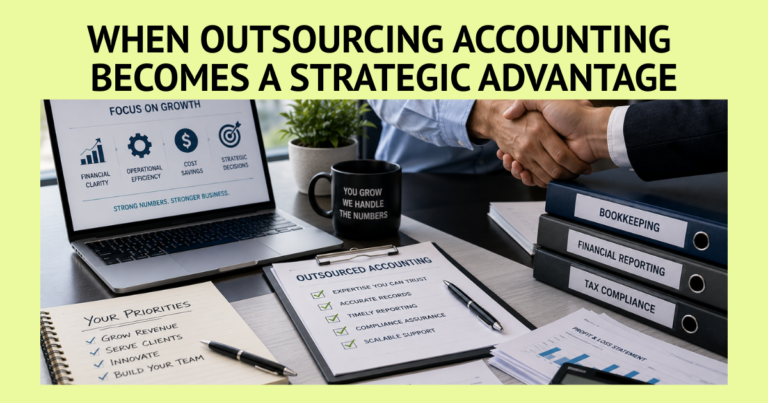
When Outsourcing Accounting Becomes a Strategic Advantage
Outsourcing accounting provides expert support, improves financial visibility, enhances efficiency, and helps growing businesses focus on strategic growth.

Tax and Financial Mistakes We Commonly See Mid-Year
Common mid-year financial mistakes can be corrected early, helping businesses improve compliance, strengthen finances, and avoid year-end surprises.

Preparing Your Business Financially for Unexpected Events
Financial preparedness helps businesses navigate unexpected challenges, maintain stability, and respond confidently when disruptions affect daily operations.
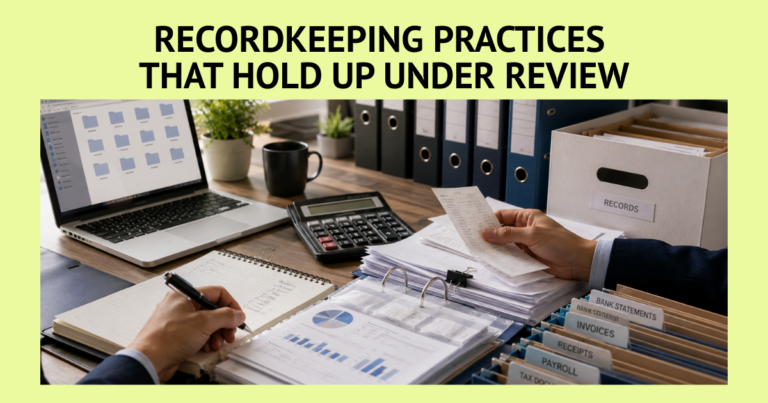
Recordkeeping Practices That Hold Up Under Review
Strong recordkeeping practices improve financial accuracy, support compliance, simplify reporting, and help businesses stay prepared for financial reviews.

Financial Red Flags That Trigger IRS or State Scrutiny
Accurate records, proper reporting, and strong financial practices help reduce IRS scrutiny and support long-term tax compliance.
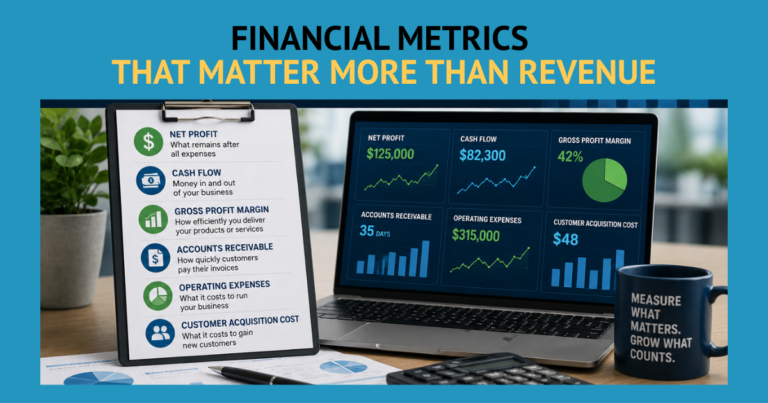
Financial Metrics That Matter More Than Revenue
Revenue alone doesn't determine success; profit, cash flow, margins, and efficiency provide a clearer picture of business health.
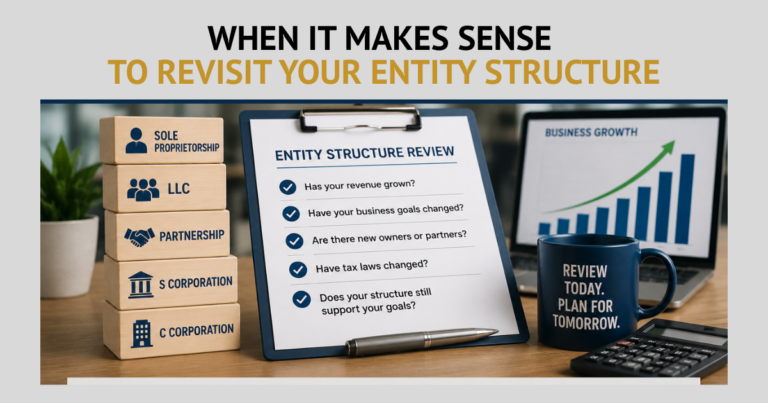
When It Makes Sense to Revisit Your Entity Structure
As businesses grow, reviewing entity structure can help align tax strategies, liability protection, and long-term business goals.

The Financial Impact of Hiring Before You’re Ready
Hiring too soon can strain finances, making it important to evaluate revenue, workload, and long-term business needs.

Signs Your Business Has Outgrown Its Current Financial Setup
Business growth can strain financial systems, making stronger processes, reporting, and planning essential for continued success.

How Often Financial Data Should Be Reviewed (and by Whom)
Business Strategy & Advisory Accounting & Financial Management Tax Planning & Compliance Financial Reviews — In a Nutshell Reviewing your...

Payroll Review Mid-Year: What to Recheck Now
Business Strategy & Advisory Accounting & Financial Management Tax Planning & Compliance Payroll Reviews — In a Nutshell Payroll is...

Planning for Taxes Before the Busy End-of-Year Season
Business Strategy & Advisory Accounting & Financial Management Tax Planning & Compliance Tax Planning — In a Nutshell The best...

Adjusting Financial Plans When the Year Doesn’t Go as Expected
Mid-year financial adjustments help businesses stay flexible, improve decisions, manage risks, and finish the year stronger.

Mid-Year Financial Warning Signs You Shouldn’t Ignore
Discover key mid-year financial warning signs and learn how early action can reduce risk and strengthen business performance.
Financial Controls That Reduce Errors and Fraud
Learn practical financial controls that help reduce errors, prevent fraud, improve accountability, and strengthen your business's financial security.