

Good Records Do More Than Support Tax Returns
Many business owners think of recordkeeping as something that’s only important during tax season.
In reality, good records support better decision-making, simplify financial management, and provide protection if questions ever arise.
The strongest records aren’t necessarily the most complicated.
They’re the most organized.
Why Recordkeeping Matters
Accurate records help you:
- Track income and expenses
- Monitor cash flow
- Support deductions
- Prepare financial statements
- Respond confidently to requests for documentation
Without reliable records, even routine financial tasks can become stressful.
Recordkeeping Habits Worth Developing
Save Documentation Consistently
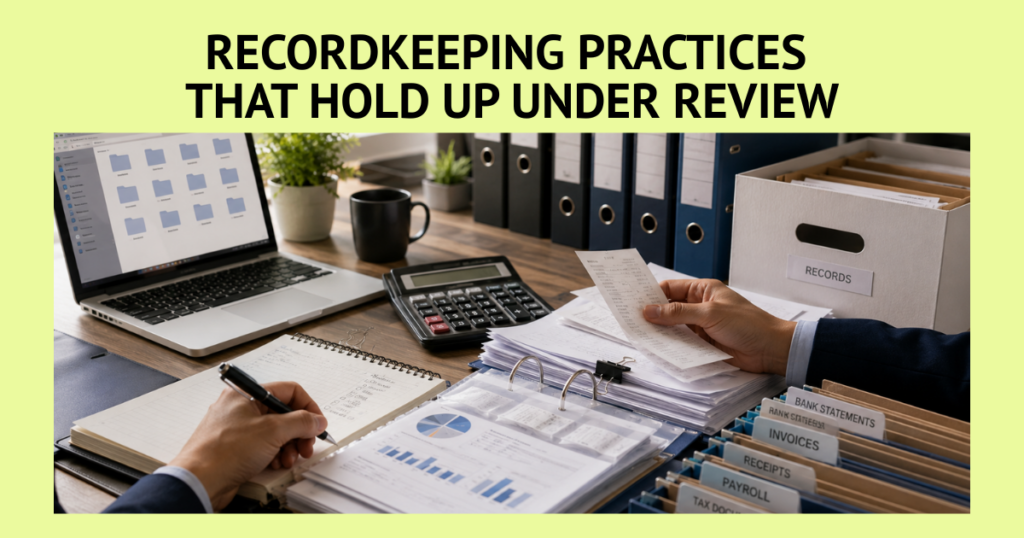
Receipts, invoices, contracts, payroll records, and bank statements should be retained and organized.
Waiting until year-end often leads to missing information.
Maintain Digital Copies
Cloud-based storage can improve organization and reduce the risk of losing important documents.
Reconcile Accounts Regularly
Monthly reconciliations help ensure records remain accurate throughout the year.
Keep Business and Personal Transactions Separate
Separate accounts make financial reporting cleaner and easier to support.
Organize by Category
Well-organized records make future reviews significantly easier.
The Bottom Line
Good recordkeeping isn’t just about compliance.
It’s about creating a reliable financial foundation that supports your business throughout the year.
Subscribe to our newsletter to receive our latest blog directly to your inbox.
- 2024 Tax Rates: Key Changes and What They Mean for You
 Stay informed about the 2024 tax rates and key updates that could impact your financial planning. From adjusted tax brackets to updates on deductions and credits, these changes could affect your taxable income and overall tax liability. Whether you’re an individual or business owner, understanding these updates is essential for optimizing your tax strategy.
 - Adjusting Financial Plans When the Year Doesn’t Go as Expected
 Mid-year financial adjustments help businesses stay flexible, improve decisions, manage risks, and finish the year stronger.
 - Bonus Depreciation vs. Section 179 Deductions in 2024: Maximizing Tax Benefits for Your Business
 Choosing between bonus depreciation and Section 179 deductions can significantly impact your business’s tax savings. Both options allow for immediate expense deductions on qualifying assets, but understanding their differences is key to maximizing your benefits in 2024.
 - Common Documentation Gaps That Delay Tax Returns
 Missing documentation can delay tax return preparation, increase questions, and create unnecessary stress during filing season.
 - Conducting a Comprehensive Year-End Financial Review: A Guide for Small Business Owners
 A thorough year-end financial review is essential for assessing your business’s performance and planning for the future. Analyze revenue, expenses, cash flow, debt, and tax obligations to identify areas for growth and improvement. Reviewing key performance indicators (KPIs) and setting financial goals will help you start the new year on solid ground. Need expert assistance with your year-end financial review? Contact us today to ensure your business is positioned for success!
 - Converting an LLC to a C-Corporation and the QSBS Reasons to Do It
 Converting your LLC to a C Corporation can unlock significant tax benefits, including eligibility for the Qualified Small Business Stock (QSBS) exclusion. This strategic move is ideal for businesses seeking to attract investors, scale operations, or leverage tax advantages.