

When Outsourcing Accounting Becomes a Strategic Advantage
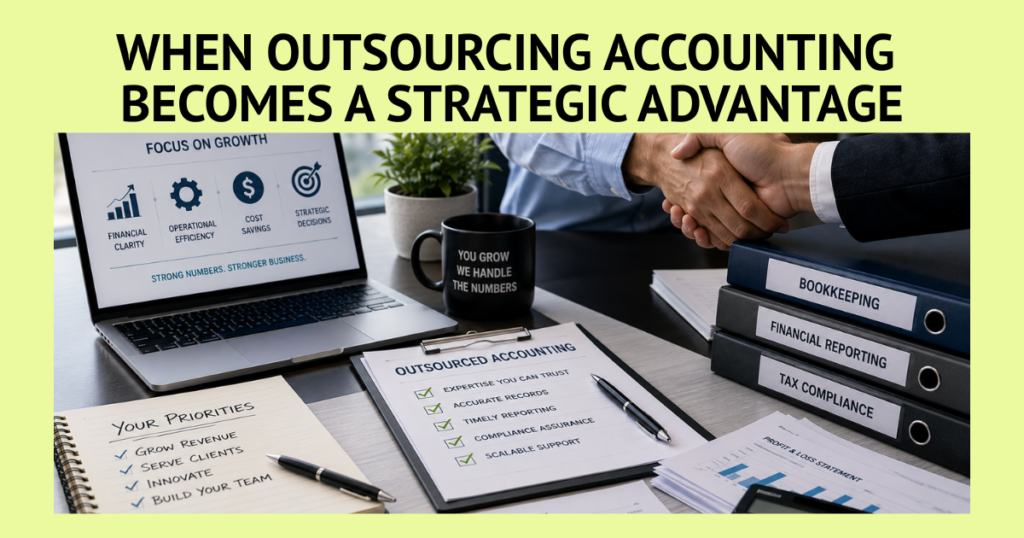
Outsourcing accounting provides expert support, improves financial visibility, enhances efficiency, and helps growing businesses focus on strategic growth.
Preparing Your Business Financially for Unexpected Events

Financial preparedness helps businesses navigate unexpected challenges, maintain stability, and respond confidently when disruptions affect daily operations.
The Financial Impact of Hiring Before You’re Ready

Hiring too soon can strain finances, making it important to evaluate revenue, workload, and long-term business needs.
Signs Your Business Has Outgrown Its Current Financial Setup

Business growth can strain financial systems, making stronger processes, reporting, and planning essential for continued success.
How Often Financial Data Should Be Reviewed (and by Whom)

Financial Reviews — In a Nutshell Your Financial Reports Can’t Help You If You Never Look at Them Most business owners understand that financial reports are important. The challenge is finding the time to review them consistently. When things get busy, it’s easy to focus on serving customers, managing employees, and handling daily operations while […]
Adjusting Financial Plans When the Year Doesn’t Go as Expected

Mid-year financial adjustments help businesses stay flexible, improve decisions, manage risks, and finish the year stronger.
Mid-Year Financial Warning Signs You Shouldn’t Ignore

Discover key mid-year financial warning signs and learn how early action can reduce risk and strengthen business performance.
How Monthly Reviews Prevent Year-End Surprises

Regular monthly financial reviews help identify issues early, improve decision-making, and prevent costly surprises at year-end.
Financial Habits That Separate Stable Businesses From Struggling Ones

Strong financial habits help businesses improve cash flow, maintain stability, make informed decisions, and achieve sustainable growth.
Why Cash Flow Problems Don’t Always Mean Low Profit

Cash flow challenges can occur even in profitable businesses, making financial management and planning essential for stability.