

Tax Payments in a Nutshell
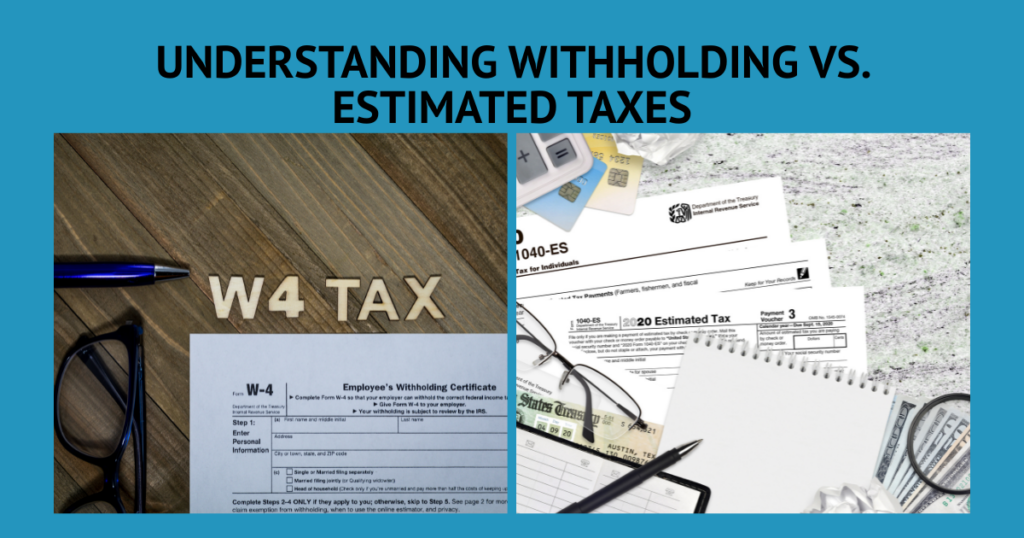
- Withholding applies primarily to employees—taxes are withheld at the source.
- Estimated taxes apply to individuals and businesses without sufficient withholding.
- Failure to pay appropriately throughout the year can result in penalties—even if the final return is accurate.
What Is Withholding?
Withholding is tax collected from wages or certain payments before funds are received. It is common for:
- W-2 employees
- Certain retirement or investment income
- Some contractor arrangements (backup withholding)
Withholding is automatic and continuous.
What Are Estimated Taxes?
Estimated taxes are quarterly payments made by:
- Business owners
- Self-employed individuals
- Investors with significant non-wage income
- S-Corp shareholders receiving distributions
These payments cover:
- Federal income tax
- Self-employment tax
- State income tax (where applicable)
Why the Distinction Matters
The IRS requires taxes to be paid as income is earned, not solely at year-end.
If payments are insufficient:
- Underpayment penalties may apply
- Interest accrues on unpaid amounts
- Cash flow pressure increases at filing time
Common Issues We See
- Business owners relying on year-end payment only
- Insufficient withholding after income increases
- Missed estimated payment deadlines
- Overpayments due to conservative assumptions
Best Practices for Tax Readiness
- Evaluate whether withholding adequately covers total tax liability
- Reassess payment strategy after income changes
- Track quarterly deadlines
- Document assumptions used in payment calculations
What Happens If Payments Are Mismanaged
- Penalties and interest for underpayment
- Unexpected balances due
- Reduced cash flow flexibility
- Increased scrutiny during review
Proper payment structure is compliance, not optional planning.
Final Thought
Understanding the difference between withholding and estimated taxes is essential for tax readiness. The right structure reduces penalties, improves cash flow management, and prevents unpleasant surprises at filing time.
The Bottom Line
Paying taxes correctly is not just about what you owe at filing—it is about when and how those taxes are paid throughout the year.
Misunderstanding withholding and estimated tax requirements can lead to penalties, interest, and unexpected balances due. The right payment structure supports compliance, protects cash flow, and eliminates avoidable surprises.
Subscribe to our newsletter to receive our latest blog directly to your inbox.
- Preparing Your Business Financials for a Smooth Year-End Close

- Giving Strategically: Aligning Charitable Goals With Tax Efficiency

- Understanding How New Tax Guidance Affects Planning Decisions

- Why Condo Boards Need More Than a Year-End Financial Report

- How Retirement Planning Changes at Higher Income Levels

- Tax Planning Moves That Still Work Late in the Year