

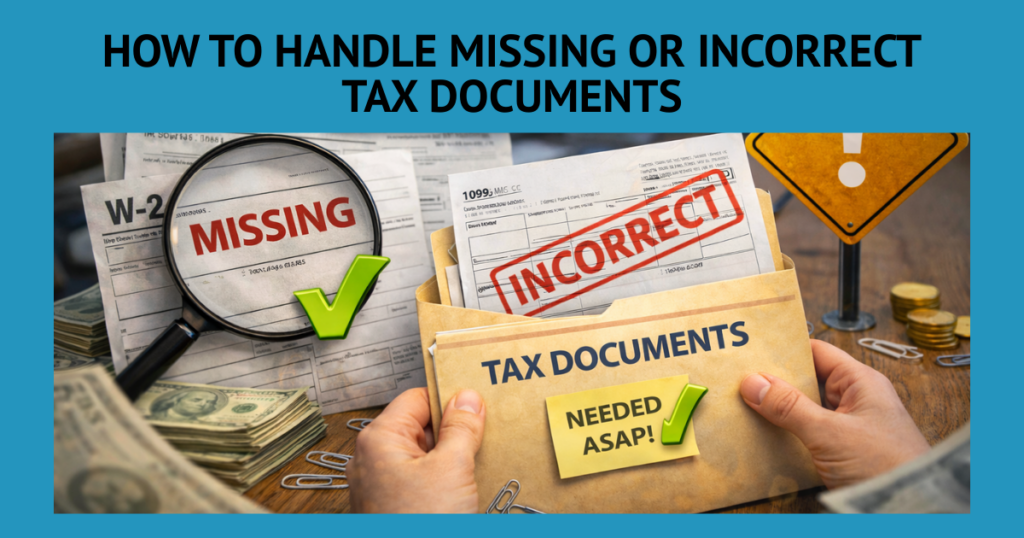
Missing or Incorrect Documents — In a Nutshell
- The IRS receives copies of most tax documents directly.
- Filing without the correct documents often creates mismatches.
- Documentation issues should be addressed before filing whenever possible.
Common Document Issues
Taxpayers frequently encounter:
- Missing W-2s or 1099s
- Incorrect income amounts
- Duplicate or corrected forms
- Late-issued statements
These issues are especially common for businesses and contractors.
Why This Matters
When a filed return does not match IRS records:
- Notices are often generated automatically
- Adjustments may follow
- Refunds may be delayed
Estimates without documentation increase risk.
Proper Handling Approach
Best practices include:
- Confirming all expected documents are received
- Requesting corrections when needed
- Documenting efforts to obtain missing forms
- Avoiding unsupported assumptions
The Bottom Line
Accurate tax reporting depends on complete and correct source documents.
Resolving document issues before filing reduces follow-ups, delays, and future corrections.
Subscribe to our newsletter to receive our latest blog directly to your inbox.
- What is Reasonable Compensation for S-Corp Owners

- Maximize Your Tax Savings with Home Office Expenses

- Effective Tax Planning Strategies

- What is an Accountable Plan?

- Understanding the Augusta Rule: A Tax-Saving Strategy for Homeowners

- Paying Your Children Through Your S-Corp or LLC: A Strategic Guide