

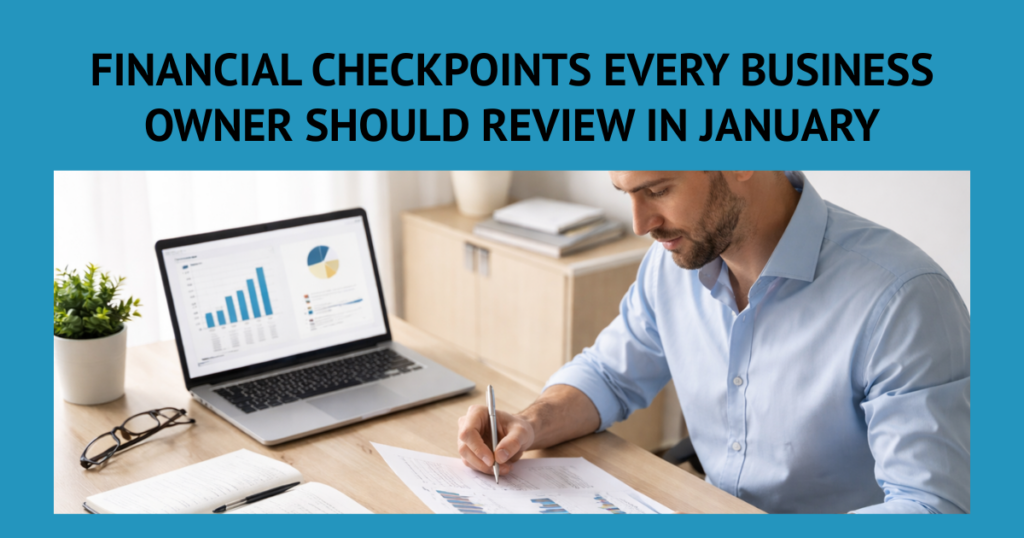
January is more than the start of a new calendar year—it’s a critical checkpoint for business owners. Reviewing key financial areas early helps prevent surprises, supports better decisions, and sets the tone for a more controlled year ahead.
Many financial issues don’t happen suddenly. They build quietly when reviews are delayed.
Why January Financial Reviews Matter
Starting the year with clarity allows you to:
- Identify errors before they grow
- Catch cash flow concerns early
- Align financial data with business goals
- Reduce stress during tax season
A January review is proactive, not reactive.
Key Financial Checkpoints to Review
1. Prior-Year Financial Performance
Review last year’s:
- Revenue trends
- Expense patterns
- Profit margins
Understanding what worked—and what didn’t—helps guide smarter decisions this year.
2. Cash Position
Assess:
- Bank balances
- Cash reserves
- Short-term obligations
Cash flow health is often more important than profit on paper.
3. Outstanding Liabilities
Review all:
- Loans
- Credit cards
- Lines of credit
Knowing what you owe—and at what cost—helps prioritize repayment strategies.
4. Tax Readiness
Confirm that:
- Records are organized
- Missing documents are identified
- Estimated tax obligations are understood
What This Means for You
A January financial checkpoint gives you control and direction. Instead of guessing, you start the year informed and prepared.
If you’re unsure how to interpret your numbers, reviewing them with your CPA early in the year can help align strategy, compliance, and goals.
Subscribe to our newsletter to receive our latest blog directly to your inbox.
- What is Reasonable Compensation for S-Corp Owners
 Understanding reasonable compensation is crucial for S-Corp shareholder-employees to stay compliant with IRS regulations and avoid hefty penalties. This guide explains what constitutes reasonable compensation, why it matters, and how to calculate it using IRS-approved methods. Whether you’re a new S-Corp owner or revisiting your compensation strategy, this blog provides essential insights to help you navigate these requirements effectively. Consult your accounting professional to ensure you’re on the right track and maintaining proper documentation for your compensation figures.
 - Maximize Your Tax Savings with Home Office Expenses
 Are you a remote worker or self-employed professional looking to reduce your tax bill? You might be eligible to claim home office expenses on your taxes! This comprehensive guide covers what qualifies as a home office, key deductions, and important considerations. Learn how to navigate direct and indirect expenses, utilize the simplified option, and ensure compliance with IRS regulations to maximize your savings. Start optimizing your tax return today with these valuable tips.
 - Effective Tax Planning Strategies
 Discover effective tax planning strategies to maximize your savings and minimize your tax liability. Learn how to utilize retirement accounts, take advantage of tax credits, optimize deductions, and leverage tax-loss harvesting. Explore tips for business owners on accountable plans and home office deductions, as well as the benefits of charitable contributions. Regularly reviewing your withholding and estimated payments can ensure you’re on track throughout the year. Dive into these practical strategies to make informed financial decisions and enhance your tax efficiency.